A brief biography of Margaret Bourke-White: In style of LIFE magazine
LOGAN SENKO | 2020

Information Designer
A brief biography of Margaret Bourke-White: In style of LIFE magazine
LOGAN SENKO | 2020
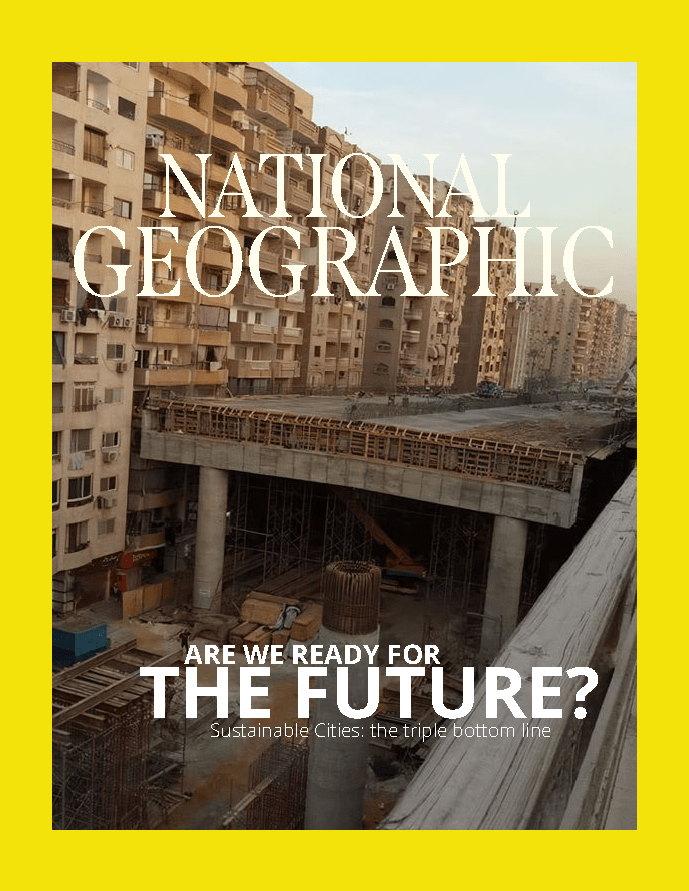
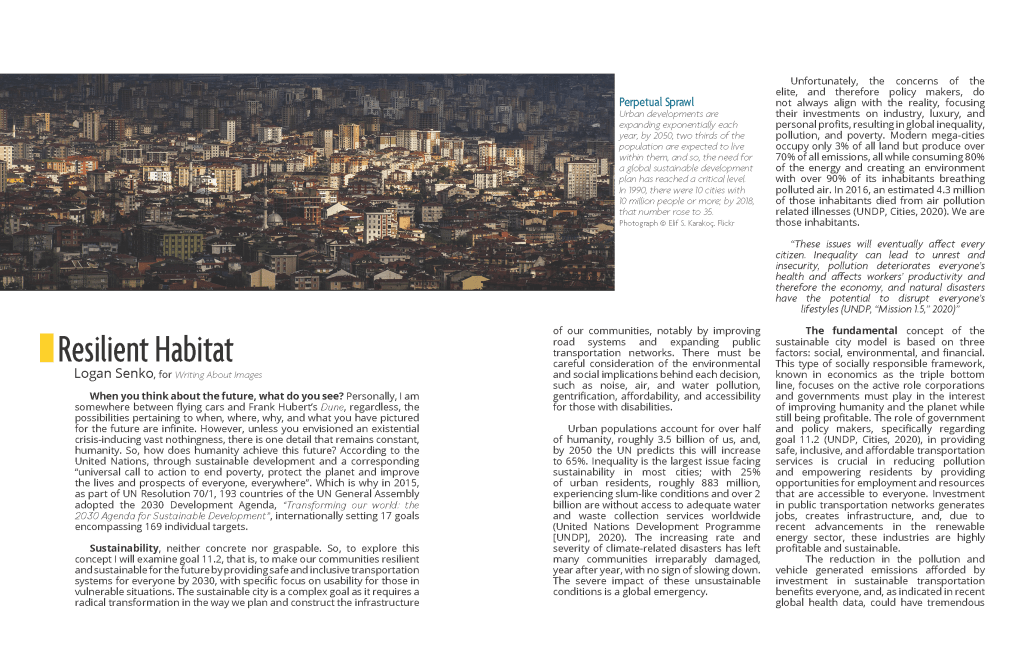
In the Style of Nat Geo: UN Sustainable Development | LOGAN SENKO | 2020


When American photographer Margaret Bourke-White arrived in Delhi, India during March of 1946 she was no stranger to photojournalism, however, this journey would be unlike any she had previously encountered. Prior to arriving in India, Margaret worked intermittently for Life magazine and is internationally recognized for her work, such as; Fort Peck Dam which appeared on the cover of the first issue of Life, documenting the Second World War as the first female war correspondent, and as the only photographer to be present in Moscow during the German invasion of 1941. Margaret’s intent while in the middle-east was to document the rapidly evolving humanitarian crisis that was unfolding in India and Pakistan, known as the Partition of India. However, when Margaret arrived at Gandhi’s compound that night she was informed by his secretary, Pyarelal Nayyar, that she would need to learn to use the charkha before she would be permitted to meet Gandhi, and so she did.

Gandhi and the spinning wheel became a “touchstone of the campaign for independence” receiving global recognition when it was featured in a tribute published following Gandhi’s assassination in 1948. Margaret is famously known for conducting Mahatma Gandhi’s last interview just a few days before his assassination, however, the image was captured two years earlier during Margaret’s first night at Gandhi’s compound in Delhi. The image features Margaret’s signature use of chiaroscuro and photo realism, her use of strong contrast between light and darkness to emphasize Gandhi’s form in the background, separate from his spinning wheel in the foreground. Another distinguishable quality of Margaret’s work is the sense of closeness with her subject, as if the essence of the experience was captured and effectively communicated to the audience.
The direct and raw connection with each moment that she photographed is what attracts audiences to Margaret’s work, you feel as if you are there, even if just for a moment. As Malavika Karlekar (2011) describes in her article ON FREEDOM’S TRAIL – Margaret Bourke-White in India:
“[photographs] that make the viewer feel that she could have been one of the crowd. They are vibrant, vital, catching the odd half-smile of a spectator, the glint of his sharp eyes as Gandhi lies fasting”
(Karlekar, para 5)
The striking intensity on Gandhi’s face has always drawn me to this image, his lean physique and piercing focus is forever a part of our history because of Margaret Bourke-White and her unwavering passion to document the human experience. If you would like to discover more about Margaret, check out her book ‘Halfway to Freedom‘ (1950).
Bourke-White, M. (1946). Gandhi and the spinning wheel [photograph]. Retrieved May 09, 2020, from http://100photos.time.com/photos/margaret-bourke-white-gandhi-spinning-wheel
Bourke-White, M. (1936). Fort Peck Dam [photograph]. Retrieved May 09, 2020, from http://100photos.time.com/photos/margaret-bourke-white-fort-peck-dam
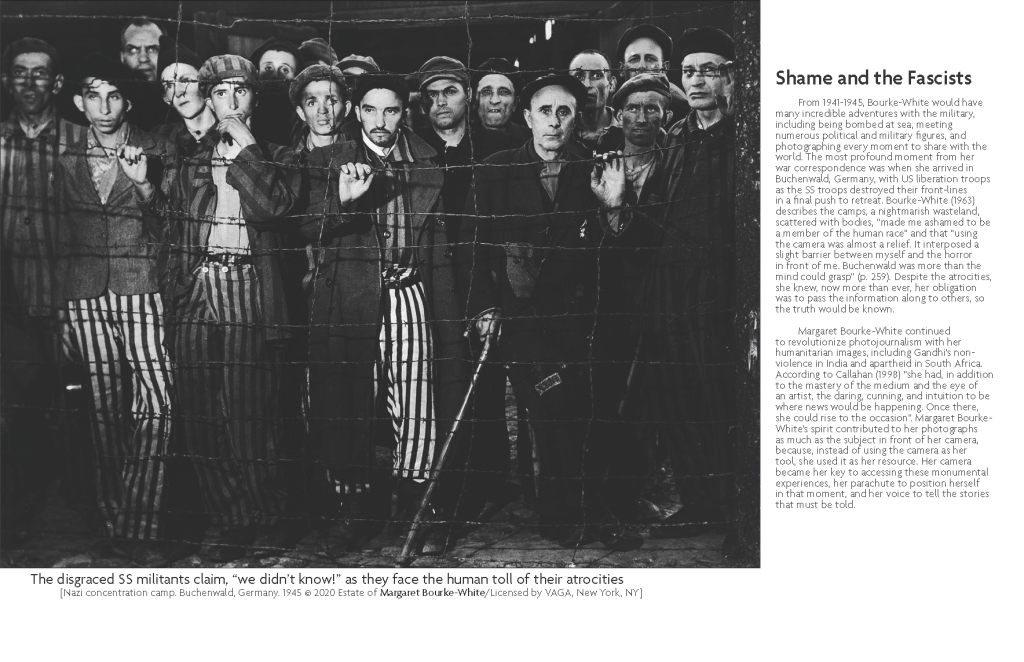
Bourke-White, M. (1945). Buchenwald Concentration Camp [photograph]. Retrieved May 09, 2020, from https://g.co/arts/c96b8Binma9GbLKy8
Bourke-White, M. (1950). Halfway to Freedom. Retrieved May 09, 2020, from https://archive.org/details/in.ernet.dli.2015.65470/page/n1/mode/2up
(“Chiaroscuro,” n.d.) Retrieved May 09, 2020, from https://en.wikipedia.org/wiki/Chiaroscuro
Gunther, S. (2011). Margaret Bourke-White – Soviet Union. https://weimarart.blogspot.com/2011/02/margaret-bourke-white-soviet-union.html
Karlekar, M. (2011). On Freedom’s Trail: Margaret Bourke-White. The Telegraph India. Retrieved May 09, 2020, from https://www.telegraphindia.com/opinion/on-freedom-s-trail-margaret-bourke-white-in-india/cid/467411
Pramod K. N. (2019). The Trailblazing Lens of Photojournalist Margaret Bourke-White. The Wire India. Retrieved May 09, 2020, from https://thewire.in/culture/the-trailblazing-lens-of-photojournalist-margaret-bourke-white
(“Partition of India,” n.d.) Retrieved May 09, 2020, from https://en.wikipedia.org/wiki/Partition_of_India

“Understanding a problem, clearly establishing its premise and whom that solution is for, is only part of the journey” writes Pedro Canhenha in his article Feedback and the Design Process
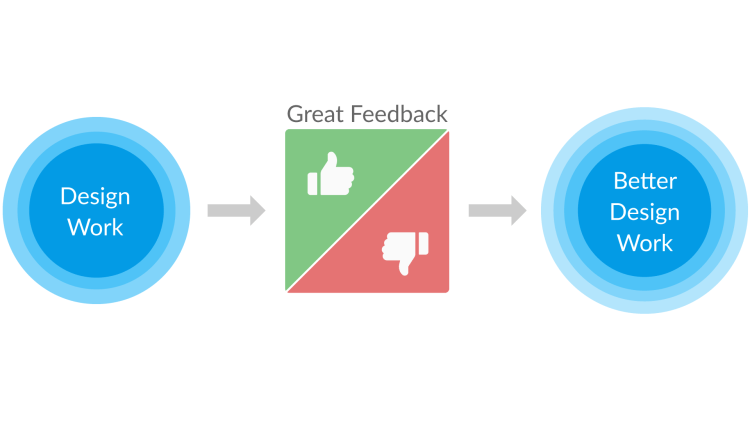
Canhenha continues:
[…] “Once that idea has been shaped into something that can be tested, and once that prototype is indeed tested, something more substantially starts occurring — formal, quantifiable feedback, that reflects users perception of utilizing that same product or feature” […]
Quantifiable feedback, reflective of user perceptions. Sounds like a ‘design thinking’ bumper sticker. So, what about the unexpected feedback?
“There’s an element of uncertainty and unpredictability in every research session that makes it exciting and challenging” writes Taylor Nguyen in her article Handling difficult situations in user research sessions

Nguyen continues:
[…] “Forget everything you know. When you’re with users, you’re a beginner learning through someone else’s experience. Yes, it makes you look like you don’t know anything — which is difficult when part of your identity is being an expert. But there’s a lot of insights you can gain when you are able to challenge your assumptions” […]
In finding a common ground with the user, you can find insight and new aspects to enhance your understanding of the problem. But wait, isn’t that what user personas are for?
“The biggest impediment to delivering well-designed products and services is a lack of understanding about our users” writes UX veteran Jared Spool in his article Undervaluing User Research is a Deadly Disease – UX Strategy Playbook with Jared Spool

Spool continues:
[…] “Just yesterday, one design leader shared an additional insight with me. “The people who exert the most influence over the user experience often have the least amount of contact with our users,” he said. I’ve found this to be completely true. In most projects, there are executives and stakeholders who make critical decisions that influence our users’ experiences. They decide how much money will be budgeted for the project, how much time the project can take, and how many people will work on it. Each of these decisions will have a dramatic influence over what the team can deliver to their users” […]
Feedback from actual human users is irreplaceable when designing products for, ya know, humans. In order to exhaust the potential variables in your solution you must have a concrete understanding of who you are designing for, the real user.
Tags: UX, UI, Information design, design thinking, design, designer, research, user experience, Jared Spool, Taylor Nguyen, Pedro Canhenha
“Frame your story in terms of the problem you are solving, including why it is a problem that needs solving” writes Lia Garvin in her article Hacking the performance review as a designer

Garvin continues:
[…] “People want to see the impact of your work — you made a document, so what? Who did it help, what did it make happen, what was made better because of your document? And within those questions, how many people or dollars were impacted?
There are many documents that have changed lives, and transformed technology. I’m not ragging on your document, just make me care” […]
So they want to see results. And telling the story of generating those results is an effective way to show them.
“If we tell stories or have conversations while using products, why not tell them before and see how it works during the design phase itself” writes Ajayraj in his article We know user stories, what are ui control stories?
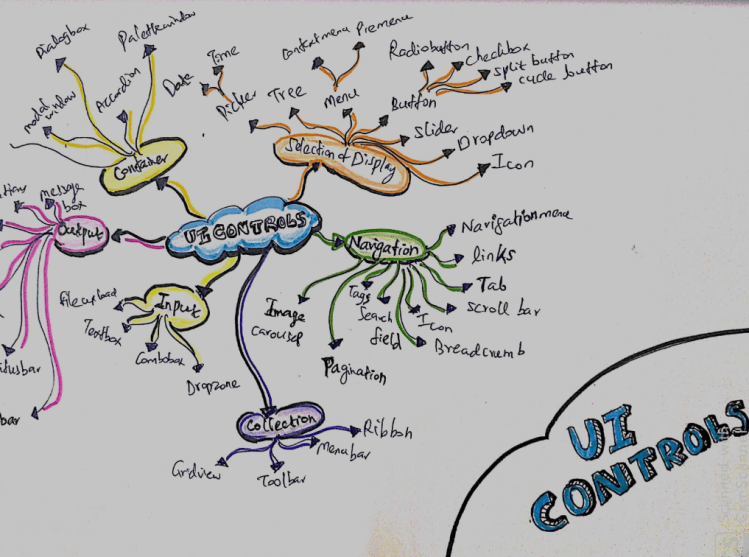
Ajayra continues:
[…] “How UI stories could help us in the process? They can be used in the phase between writing user stories and creating wireframes. Since during the wireframe phase we directly jump into solutions, these stories can be used as a validation tool” […]
Integrating stories into the design process can be an effective tool in expanding the scope of your solution. So can stories be incorporated even sooner? Like before you land that designer job?
“Stories allow recruiters to imagine what it’s like to work with you” writes Yu Siang Teo in his article titled How to Write Great Case Studies for Your UX Design Portfolio
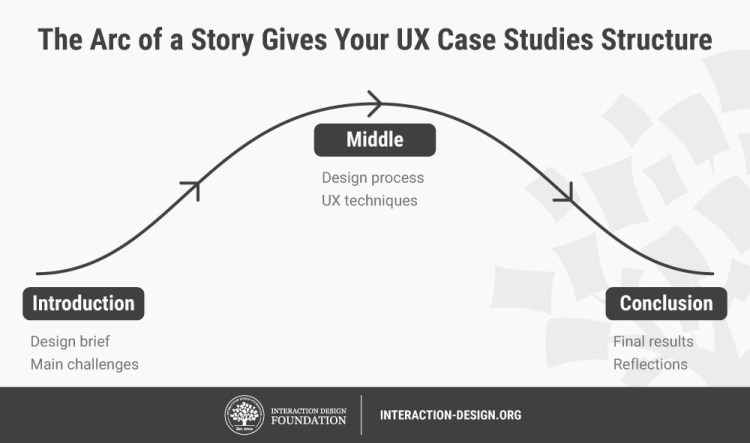
Teo continues:
[…] “when you present your case study as a story, you’ll find it far easier to give it a satisfying structure and captivate your reader … we use stories to learn and imagine all the time—in fact, people have since the dawn of human history. Therefore, recruiters will find it easier to look into the future and predict if they’d like to work with you when they read a story-based case study. They’ll find it easier to understand who you are and how you solve a problem” […]
Stories can be integrated into every aspect of a designer’s existence. From their portfolio, to their largest projects. So start incorporating stories into your work today!
Tags: UX, UI, Information design, design thinking, design, designer, research, user experience, Yu siang Teo, Ajayra, Lia Garvin, storytelling
“Connecting the dots between design and business outcomes proves to be overwhelming and it’s often considered too difficult or impossible” writes Stef Ivanov in his article titled A Practical Example of How to Measure the Impact of Design – Design for Growth

Ivanov continues:
[…] “To track the impact of the design work, you have to break all changes you’re about to apply into small, measurable design projects. Don’t get alarmed; this is still one project, and you don’t need to design them one by one or in a specific order. The flow of work should be whatever works for the team” […]
Break it down into measurable plots. Got it. But what does that mean for UX design projects?
“We brainstormed problems that are already occurring rather than solutions to fix them” writes Mariyamelshrieff in her article titled How UX Design Impacts Everyone
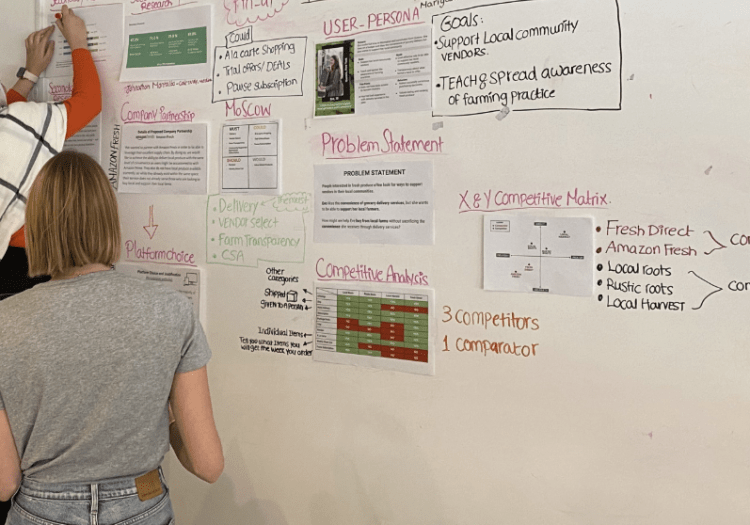
Mariyamelshrieff continues:
[…] “We identified that there was a gap between consumers who wanted to support local agriculture and buy local produce, and small local farms who want to reach these consumers. We presented our project proposal to stakeholders as this was a chance to prove the need for this solution from a business point of view. Communicating with a stakeholder in the language they understand is crucial for building that impactful product. Often, we focus too much on UX without looking at the solution from a business or technical point of view. We sometimes need to put our empathy hat on to be able to see the bigger picture.” […]
To gain a deeper understanding, go for the big picture. Evoking empathy is a good way to do that. But how exactly?
“An Empathy map will help you understand your user’s needs while you develop a deeper understanding of the persons you are designing for” writes Rikke Friis Dam & Yu siang Teo in their article titled Empathy Map – Why and How to Use It
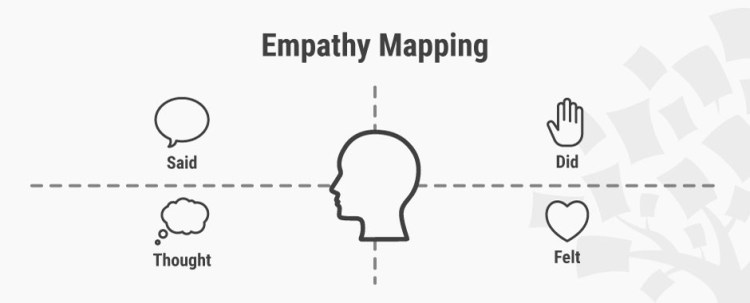
They continue:
[…] The four quadrants reflect four key traits, which the user demonstrated/possessed during the observation/research stage. The four quadrants refer to what the user: Said, Did, Thought, and Felt. It’s fairly easy to determine what the user said and did. However, determining what they thought and felt should be based on careful observations and analysis as to how they behaved and responded to certain activities, suggestions, conversations, etc” […]
In constructing an empathy map, a designer can gain a greater understanding of their problem, identify possible gaps between the needs of the user and the business model. Evoke empathy, create understanding.
Tags: Rikke Friis Dam, Yu siang Teo, Mariyamelshrieff, Stef Ivanov, UX, UI, Information design, design thinking, design, designer, research, user experience
“Often the most critical information isn’t quantifiable” writes Adam Raphael in his article UX research methods and when to Use them

Raphael continues:
[…] “If you’re confused about which type of user research you should implement, you can listen to an expert’s voice as Jakob Nielsen of the Nielsen Norman Group feels that in the case of UX research, it is better to focus insights (qualitative research) and that although quant has some benefits, qualitative research imparts complex information, so it’s easy to apprehend, and overall delivers convincing results less costly” […]
Great. So qualitative research is both cost effective and delivers an easily consumable information package. What about proactive research? For those eager beavers.
“Can the users successfully use the thing we are building? Have we designed this thing to meet their expectations?” writes UX veteran Jared Spool in his article What Proactive UX Research Looks Like

Spool continues:
[…] “Proactive research anticipates the information needed for the people making these critical decisions. Proactive research provides a deep understanding of the users’ problems, to guide the decision-makers to the right solutions. To make the right decisions, those decision-makers need to understand these problems in-depth, not at the surface level that reactive UX research typically provides” […]
In depth, complete understanding. It’s hard to argue with that logic. So what does that look like in a real world project?
“it’s understanding how to communicate, how to persuade, how to inform, how to craft a story that’s powerful” according to Corbet Fawcett in a Brainstation blog post titled Inside UX Research With Scotiabank Digital Factory

Fawcett continues:
[…] “Creating investment in research. That’s all about making research a partnership, a collaboration between UX Researchers, Designers, and product teams. Research is a tool to help other teams make decisions, so it’s not something that can happen in a silo. Creating strong partnerships is essential” […]
UX research and decision making. The benefits outweigh the investment. So in review, an investment in user experience research equals profit.
Tags: Adam Raphael, Jared M. Spool, Brainstation Blog, blog, UX, UI, Information design, design thinking, design, designer, research, ux research

 Logan Senko
You must be logged in to post a comment.