Some designs miss the mark. You want to love it, but you just don’t. Why is it no good? Did the designer walk out halfway through?
That design had no impact
“Connecting the dots between design and business outcomes proves to be overwhelming and it’s often considered too difficult or impossible” writes Stef Ivanov in his article titled A Practical Example of How to Measure the Impact of Design – Design for Growth
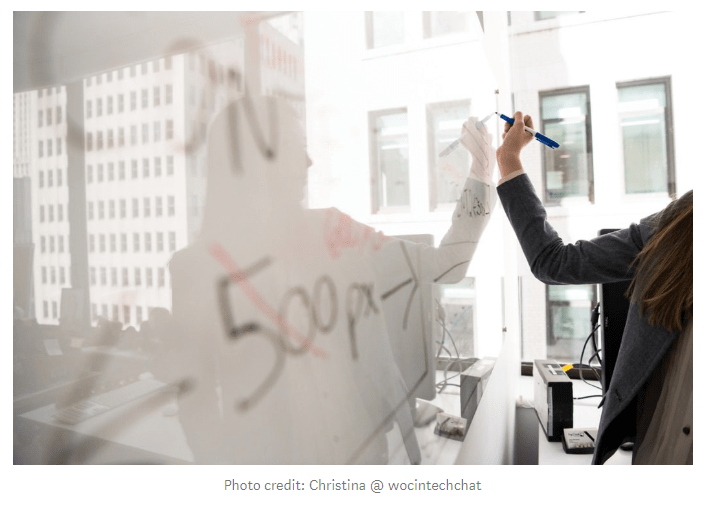
Ivanov continues:
[…] “To track the impact of the design work, you have to break all changes you’re about to apply into small, measurable design projects. Don’t get alarmed; this is still one project, and you don’t need to design them one by one or in a specific order. The flow of work should be whatever works for the team” […]
Break it down into measurable plots. Got it. But what does that mean for UX design projects?
“We brainstormed problems that are already occurring rather than solutions to fix them” writes Mariyamelshrieff in her article titled How UX Design Impacts Everyone
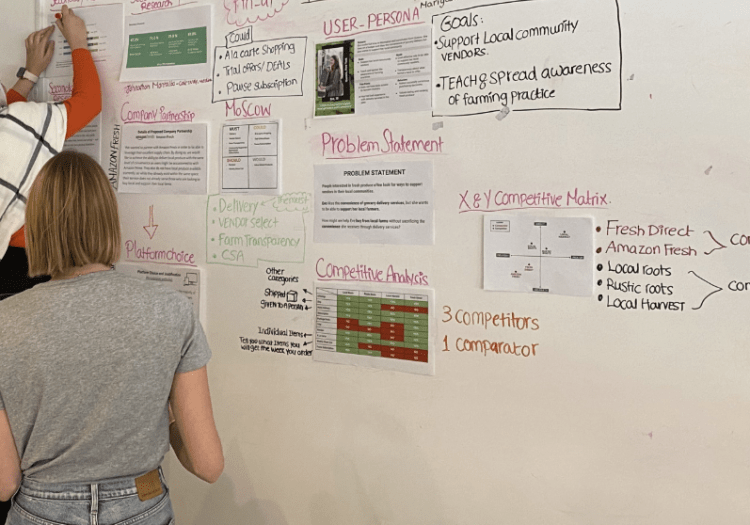
Mariyamelshrieff continues:
[…] “We identified that there was a gap between consumers who wanted to support local agriculture and buy local produce, and small local farms who want to reach these consumers. We presented our project proposal to stakeholders as this was a chance to prove the need for this solution from a business point of view. Communicating with a stakeholder in the language they understand is crucial for building that impactful product. Often, we focus too much on UX without looking at the solution from a business or technical point of view. We sometimes need to put our empathy hat on to be able to see the bigger picture.” […]
To gain a deeper understanding, go for the big picture. Evoking empathy is a good way to do that. But how exactly?
“An Empathy map will help you understand your user’s needs while you develop a deeper understanding of the persons you are designing for” writes Rikke Friis Dam & Yu siang Teo in their article titled Empathy Map – Why and How to Use It
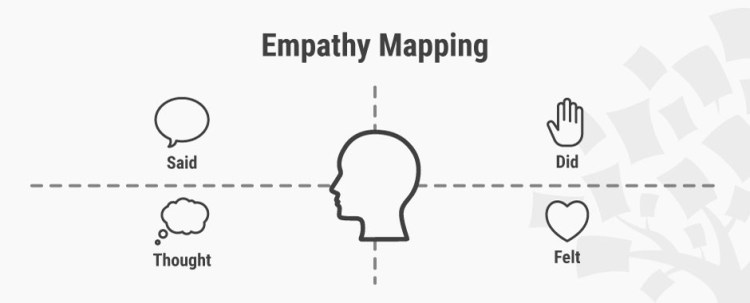
They continue:
[…] The four quadrants reflect four key traits, which the user demonstrated/possessed during the observation/research stage. The four quadrants refer to what the user: Said, Did, Thought, and Felt. It’s fairly easy to determine what the user said and did. However, determining what they thought and felt should be based on careful observations and analysis as to how they behaved and responded to certain activities, suggestions, conversations, etc” […]
In constructing an empathy map, a designer can gain a greater understanding of their problem, identify possible gaps between the needs of the user and the business model. Evoke empathy, create understanding.
Tags: Rikke Friis Dam, Yu siang Teo, Mariyamelshrieff, Stef Ivanov, UX, UI, Information design, design thinking, design, designer, research, user experience
 Logan Senko